
photo credit: BStok Production
The Bean Protocol: What I Eat in a Day
(And What This Season of Healing Taught Me About Food, Digestion, and the Whole Family)
A Note Before You Read
This post was originally written during a very specific season of my own healing, when I was actively following the Bean Protocol to support digestion, inflammation, and overall gut health.
Since then, my work has evolved significantly.
How My Approach to the Bean Protocol and Family Healing Has Changed
Today, I specialize in supporting picky eaters and families through a biology-informed, animal-forward, lectin-aware approach that looks at digestion, nervous system safety, sensory processing, and food tolerance together, not in isolation.
I’m intentionally leaving this post up because it continues to help many people. But I now view protocols like this as temporary tools, not long-term solutions, especially for children and sensitive nervous systems.
In my work today, I rarely use a one-size-fits-all approach. Some bodies do well with legumes. Others do not, particularly when digestion, mineral absorption, or sensory sensitivity are involved.
If this makes you curious about how food sensitivity or digestion may be showing up in your own home, you can take my free Picky Eating Root Cause Quiz to explore what might be driving food struggles beneath the surface.
That said, if you came here to understand the Bean Protocol and what it looked like in real life, let’s get into it.
But I know you originally came here to learn about the bean protocol so let’s get into it then, shall we?
Over the years, many people have reached out asking what I actually eat in a day while on the Bean Protocol.
Some wondered if I only ate beans. Others asked how beans could realistically show up at every meal. A few questioned how much was really necessary.
I wrote this post to offer a clear, realistic look at what eating on the Bean Protocol looked like for me and to show that it’s actually quite straightforward.
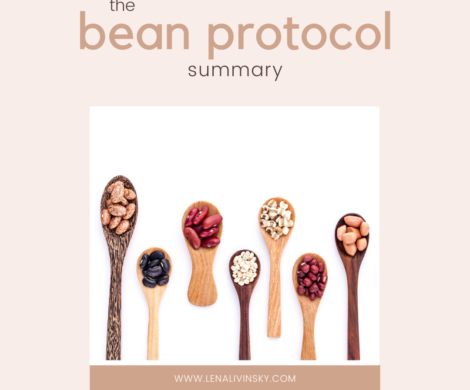
There are strict rules while on the protocol. You can see a previous post I wrote, which provided the Bean Protocol summary here:
10 Things You Should Know About the Bean Protocol
The rule of thumb is that while on the bean protocol, you eat 3 meals a day consisting of 1/2 cup of beans, a palm-sized serving of healthy protein, and 1/2 cup of veggies. It’s actually quite simple when you break it down this way. The part that gets tricky is keeping out all the items on the no list. Some of these include soy, coconut, caffeine, alcohol, and sugar. That immediately eliminates fruits, tofu, chocolate, sweeteners, coffee, etc., from all of your meals. You’d be surprised to see how many items have added sugar to them. Karen Hurd, the creator of the Bean Protocol, states that you can have naturally added sugar up to 5g per serving. That’s actually not a lot, so please be careful when choosing your ingredients.
What the Bean Protocol Looked Like in My Real Life
Breakfast on the Bean Protocol
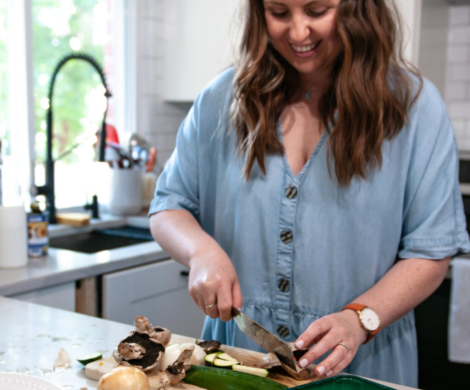
Here is what my breakfast looked like. I keep it super basic and whole foods-based. I eat mostly plant-based meals, but for the purpose of the protocol have added 1-2 eggs a day to my diet. Every morning I sautee or cook 1 egg, 1/2 cup of beans, and a seasonal veggie of choice. Lately, I’ve been eating raw tomatoes from my mom’s garden to fulfill my veggie requirement. Those are just too good to pass up. Other times, I’ll cook things like spinach, onions and mushrooms, carrots, or other collard greens with my beans. I usually season them with some curry powder, fresh garlic, and salt. There are endless combinations of this breakfast. What I love about it most is that it’s healthy, quick, and very easy to make. It checks all the boxes for me.
Lunch on the Bean Protocol
Lunches vary based on whether I cook them or my husband makes something. We actually subscribe to Purple Carrot, which is a plant-based delivery system, offering delicious vegan meals. If he cooks, that’s what he makes. I coached him, though, not to mix fats with my beans and what ingredients I couldn’t have. I carefully choose the meals for each week, making sure I select the most Bean Protocol-friendly recipes. If you’d like to try the subscription yourself, they are offering 30$ off your first week of meals. When I make my lunch myself, I usually eat dinner leftovers or make my few go-to recipes. Sometimes I make a bean salad with a hard-boiled egg. I make some cauliflower gnocchi with beans in tomato sauce and an egg on the side. Sometimes I make a tomato and cucumber salad with beans and scrambled eggs. Here are some recipes you could try for lunch:
My go-to lentil bolognese (I use chickpea pasta): https://biancazapatka.com/en/lentil-bolognese-with-spaghetti-vegan/
Bean salad recipe (remember to keep your oil to a minimum, we don’t want to mix it with the beans if we can avoid it): https://cooktoria.com/three-bean-salad/#wprm-recipe-container-10889
This one is by far my favorite chili recipe I’ve ever made. Enjoy! https://milkfreemom.com/vegan-quinoa-sweet-potato-chili/
Dinner on the Bean Protocol
If I do not have Purple Carrot for dinner, I will usually make a Mexican-inspired recipe, a soup, potato, or pasta dish. I am trying to keep carbs and grains out of my diet for weight loss purposes, but being frankly honest here, I don’t succeed in that every day. I just love potatoes so much! We have a go-to Mexican take-out place that we order from, where sometimes I will get steamed veggies, Mexican rice, and black bean combo. That’s honestly the only meal I can order where I feel I am following the Bean Protocol. It’s hard to order out if you genuinely want to keep the protocol clean, but it’s doable. Here are some fantastic Bean Protocol-friendly dinner recipes I recommend.
This soup was terrific, hold the coconut! I added some almond milk instead: https://elavegan.com/vegan-white-bean-soup/#wprm-recipe-container-7730
Chickpea stew, I doubled my chickpeas and some of the ingredients mentioned: https://healthiersteps.com/recipe/chickpea-stew-gluten-free-vegan/
Shepherd’s Pie, hold the vegan butter (it probably has coconut or soy in it), add oat or almond milk instead: https://minimalistbaker.com/1-hour-vegan-shepherds-pie/
That’s basically I ate while on the bean protocol. It got tricky when I went away for the weekend or someone invited me over for dinner. I did bring my own set of beans, which I added to the meals, and tried to stick to the protocol as much as possible. If I couldn’t follow it strictly, I gave myself some grace and tried and track it at least 80% of the time. I still saw great results in terms of improved health, despite sometimes not following the protocol entirely.
What the Bean Protocol Taught Me About Healing the Whole Family (and Why I Work Differently Now)
Following a structured protocol taught me something I now see again and again in both adults and children: healing rarely happens in isolation.
Many people come to protocols like this because their body is struggling — digestion feels off, energy is low, inflammation is high, or food suddenly feels complicated.
While a protocol can offer relief, it often reveals something deeper: the body has been under strain for a long time. This realization is where my work began to evolve.
Over the years, I began noticing the same patterns showing up across entire households. A parent working hard to heal their gut. A child becoming more selective with food. Heightened stress around meals. Increased food rules. More pressure, even when the intention is health.
How Food Stress Builds Quietly in Families
In families, these things are connected.
When One Person Is Healing, the Whole Family Feels It
Picky eating is often one of the most visible signals that something in the family system needs support. It can reflect digestion that isn’t fully ready, a nervous system that feels overwhelmed, mineral imbalances, sensory sensitivities, or a child who is picking up on stress around food, even when it’s subtle.
Just like adults, children respond to how food feels in their bodies.
That’s why I no longer view healing protocols as standalone solutions, especially for families. A food plan may help calm symptoms, but lasting change comes from understanding why the body is reacting in the first place and addressing those root causes with nuance, flexibility, and safety.
Why Picky Eating Is Often a Family Signal, Not a Food Problem
Today, my approach focuses on biology-informed, family-centered healing.
That means looking at digestion, nervous system regulation, oral and sensory development, and food quality together, not separately.
Some bodies tolerate legumes well.
For others, legumes can be challenging, especially when lectins, mineral absorption issues, or immature digestion are part of the picture. This can show up in both adults and children.
When we stop forcing foods and start listening to what the body is communicating, healing becomes more sustainable and mealtimes become calmer, more connected, and less stressful for everyone involved.
If you’re here trying to heal yourself and wondering why food feels hard for your child, you’re not missing anything. These pieces are often part of the same story.
Many parents I work with start by trying to heal their own bodies and then begin noticing food rigidity, anxiety, or strong preferences in their children. If that’s happening in your home, my free Picky Eating Root Cause Quiz can help you connect the dots between digestion, sensory processing, and nervous system safety.
A Gentle Next Step for Parents Navigating Picky Eating
If you’re starting to notice food struggles, rigidity, or stress around meals with your child, I created a free Picky Eating Root Cause Quiz to help parents uncover what may be driving food resistance beneath the surface from digestion and sensory processing to nervous system safety.
👉 Take the Picky Eating Root Cause Quiz
I’d Love to Hear From You
If you’ve explored the Bean Protocol at any point, I’d love to hear how your body responded — not just in terms of symptoms, but how food felt overall.
You’re also welcome to share if this post sparked questions about digestion, food tolerance, or how eating patterns show up differently for adults and children in the same household.
You can leave a comment below or send me a DM on Instagram @lena.livinsky. I read every message and truly love hearing how people are navigating healing — both individually and as a family.

Download The Bean Protocol Summary Here: